Immigration Lawyer Guide: Rights, ICE Limits & Help
Need an immigration lawyer? Learn your rights, what ICE can/can’t do, and next steps. Call 1-844-967-3536 for help today.
Vasquez Law Firm
Published on January 14, 2026

Immigration Lawyer Guide: What Agents Can—and Can’t—Do Under the Law
If you or a loved one is worried about immigration enforcement, speaking with an immigration lawyer can help you understand your rights, your options, and what to do next. Recent national coverage about enforcement activity has renewed questions about where government authority ends and individual protections begin—especially during stops, home visits, and detention.
Worried about an immigration issue right now? Get calm, clear guidance. Call Vasquez Law Firm, PLLC at 1-844-967-3536 to request a consultation. Se Habla Español.
What This News Means for Orlando Residents
Why this story matters
A recent report raised urgent questions about what immigration agents can do during enforcement actions and what legal limits apply. You can read the coverage here: Time Magazine coverage via Google News.
Even if you are not directly involved in an incident, news like this often leads to increased fear, confusion, and rumors. That can cause people to sign bad paperwork, miss deadlines, or avoid help when they need it most.
Common enforcement scenarios we see
Serving orlando residents, we often hear concerns about:
- Home visits where officers ask to “talk” or request entry
- Workplace encounters and questions about identity or status
- Traffic stops that turn into immigration holds
- Detention and transfers after an arrest
Your goal: protect your case and your family
What you do in the first minutes of an encounter can shape your immigration case. A qualified immigration lawyer can help you avoid self-incrimination, preserve defenses, and respond the right way—especially if removal (deportation) is a risk.
What Immigration Agents Can—and Can’t—Do (Plain English)
Administrative warrant vs. judicial warrant
Many people don’t realize there are different types of warrants. In immigration enforcement, officers may present paperwork that looks official but is not signed by a judge.
- Judicial warrant: Signed by a judge or magistrate. This can authorize entry or a search in certain situations.
- Administrative immigration warrant: Often issued within an agency. It may support arrest for immigration purposes, but it does not automatically give the right to enter your home without consent.
If officers come to your door, you can ask them to slide the warrant under the door or hold it up to a window. You do not have to open the door just to “take a look.”
Home entry and consent: what you can say
In most cases, if there is no judicial warrant, officers need permission to enter a private residence. Consent can be given by anyone with apparent authority, including roommates or family members.
Simple, respectful phrases can help:
- “I do not consent to entry.”
- “I want to speak to my lawyer.”
- “Please leave your card. I will have my attorney contact you.”
Stops, questions, and documents
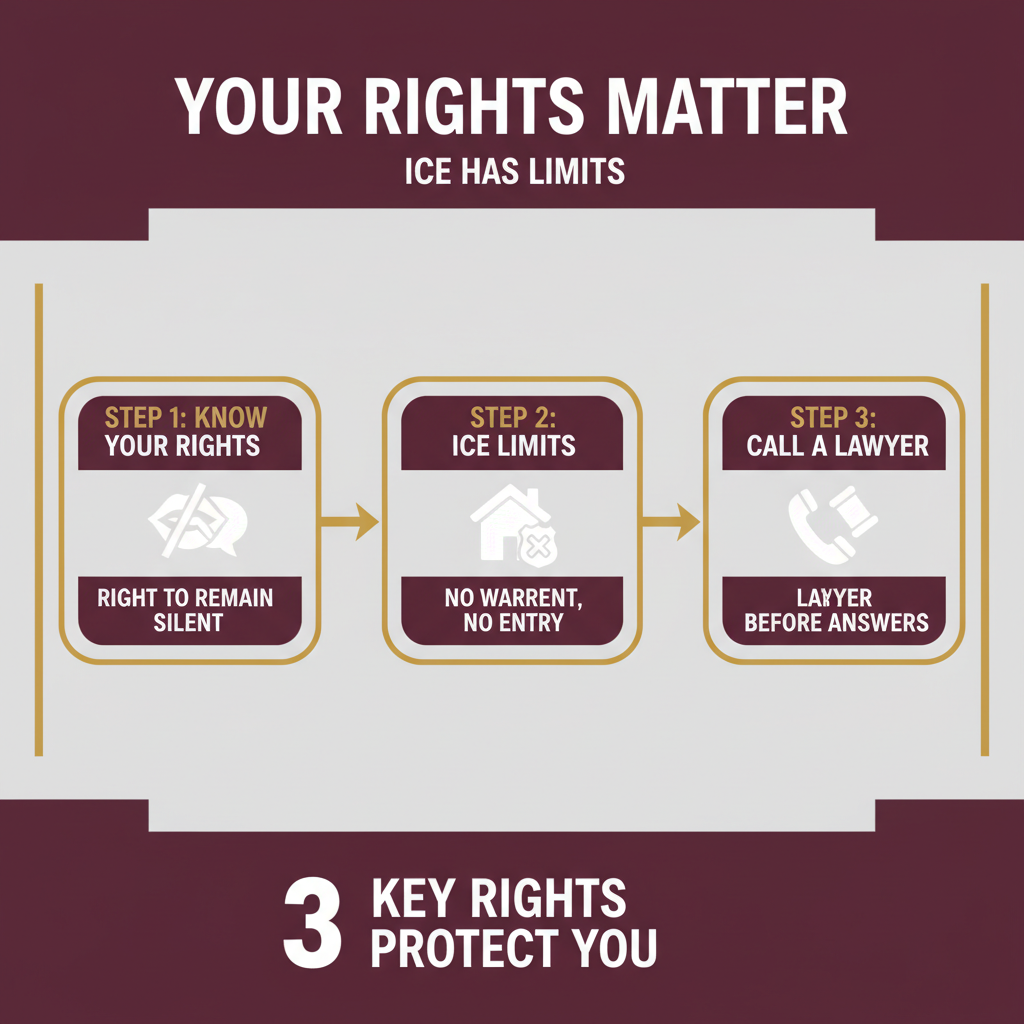
Officers may ask questions about your name, country of birth, and status. You generally have the right to remain silent. You also have the right to consult an attorney before signing papers.
Important: Never present false documents or lie to a federal officer. That can create serious criminal and immigration consequences.
Legal Background: The Rules That Shape Immigration Enforcement
Who runs immigration enforcement?
Immigration is primarily federal. Key agencies include USCIS (benefits), ICE (enforcement), and CBP (borders). For official benefit rules and forms, start with USCIS.gov.
Immigration court and due process
If the government places someone in removal proceedings, the case is heard in immigration court under EOIR (Executive Office for Immigration Review). The court process includes notices, hearings, and the opportunity to apply for relief, depending on eligibility. EOIR information is available at justice.gov/eoir.
Due process is not a technicality. It includes the right to a hearing and the right to present evidence. But immigration court is complex, and deadlines are strict.
Visas and consular processing
Many cases involve visas and consular processing. Travel and visa categories are explained by the U.S. Department of State at travel.state.gov. Choosing the correct category matters because a wrong filing path can trigger delays or denials.
When You Should Contact an Immigration Lawyer (and What to Bring)
Red flags that need legal help fast
Some immigration problems are time-sensitive. Contact an immigration lawyer quickly if you have any of the following:
- A prior removal (deportation) order, even from years ago
- An arrest or pending criminal charges
- A Notice to Appear (NTA) or immigration court hearing date
- Missed biometrics, RFEs, or deadlines from USCIS
- Concerns about fraud, misrepresentation, or prior false claims
Documents to gather before your consult
To make your first meeting more productive, try to collect:
- Any USCIS notices (I-797), receipts, and decisions
- Your passport, visa, I-94 record (if available), and ID documents
- Prior immigration court paperwork, if any
- Marriage, birth, and divorce records (certified copies if possible)
- Police reports, citations, and final criminal dispositions
Avoid “notario” harm
In many communities, unauthorized immigration help causes real damage. A non-lawyer may file the wrong form, miss a waiver issue, or encourage a risky strategy. If you are in orlando and unsure who you are dealing with, verify credentials and talk to a licensed attorney.
Need a plan, not guesses? Call 1-844-967-3536 and let us review your situation. We help clients understand options for family petitions, humanitarian relief, and defense. Contact us. Se Habla Español.
How Vasquez Law Firm, PLLC Helps With Immigration Cases
Experience, credentials, and communication
Vasquez Law Firm, PLLC is led by Attorney Vasquez, JD, with 15 years of experience in immigration law. Attorney Vasquez is admitted to the North Carolina State Bar and the Florida Bar.
Clients deserve updates they can understand. Our team explains risks, timelines, and next steps in plain language. Se Habla Español.
Common matters we handle
Every case is different, but clients often come to us for:
- Family-based immigration (petitions, adjustment of status, consular processing)
- Work-related options (when available and appropriate)
- Removal defense strategies and immigration court preparation
- Waivers for inadmissibility and prior immigration violations
- Humanitarian relief options based on eligibility
Learn more about our Immigration Law services and meet our team on the Attorney Vasquez page.
Serving Orlando and surrounding communities
We are proud to be serving orlando residents and families across Central Florida, including Kissimmee, Sanford, and Winter Park. Many clients also need help coordinating documents from abroad while managing local work and family obligations.
When court is involved, we help clients prepare for hearings and understand the process tied to immigration court and related federal procedures. Being ready matters.
What to Do If ICE Contacts You or a Family Member
If officers come to your home
Stay calm. Do not run. Do not open the door just because someone says they are law enforcement.
- Ask: “Do you have a judicial warrant signed by a judge?”
- Ask to see it through a window or under the door.
- Say: “I do not consent to entry.”
- Do not sign documents you don’t understand.
If someone is detained
If a loved one is detained, try to gather:
- Full legal name and date of birth
- A-number (if known)
- Where and when the person was last seen
- Any paperwork they received
Then contact an immigration lawyer to evaluate bond options, relief eligibility, and whether there are prior orders that change strategy.

Be careful with social media and “advice”
Do not post details about your status, location, or plans on social media. Do not rely on viral posts that promise “easy fixes.” Immigration outcomes depend on facts, records, and the law.
Frequently Asked Questions
1) Do I have to open the door for immigration officers?
Not always. If officers do not have a judicial warrant, you generally can refuse entry and speak through the door. If they do have a judicial warrant, you should comply while still exercising your right to remain silent and request counsel. Because facts matter, speak with an immigration lawyer about your specific situation.
2) What is the difference between ICE and USCIS?
USCIS handles benefits like petitions and green card applications. ICE focuses on enforcement, detention, and removals. Many people have both USCIS and ICE issues at different times, which is why consistent legal guidance helps.
3) Can I be deported for a minor criminal charge?
It depends. Some offenses create deportability or inadmissibility, and even a plea deal can trigger immigration consequences. The immigration impact is not always the same as the criminal penalty. Get legal advice before accepting any plea.
4) How long does a family-based green card case take?
Timelines vary based on the category, the applicant’s location, background checks, and visa availability. Some cases move faster through adjustment of status, while others require consular processing. Checking official sources (like USCIS and the Department of State) and building a complete filing packet can reduce delays.
5) Should I attend my immigration court hearing even if I’m scared?
Yes. Missing court can lead to an in-absentia removal order, which can be very hard to undo. If you are in orlando and you have a hearing notice, speak with counsel immediately so you can prepare and present any eligible defenses.
6) What should I look for when choosing an immigration lawyer?
Look for a licensed attorney with focused immigration experience, clear communication, and a process for gathering evidence and meeting deadlines. Ask who will handle your case, how updates are provided, and what risks you face. Also avoid anyone who guarantees results—ethical lawyers can’t promise outcomes.
Ready to protect your future? If you need an immigration lawyer who will explain your options clearly and fight for you, call 1-844-967-3536 or request help online. Se Habla Español.
Disclaimer: This article is for general information only and does not create an attorney-client relationship. Immigration laws change, and outcomes depend on individual facts. For legal advice, consult a qualified attorney.
Free Legal Consultation
Discuss your case with our experienced attorneys. We're available 24/7.
Vasquez Law Firm
Legal Team
Our experienced attorneys at Vasquez Law Firm have been serving clients in North Carolina and Florida for over 20 years. We specialize in immigration, personal injury, criminal defense, workers compensation, and family law.